Research

A chronological index of papers, datasets, models, and software. Each entry links to the original paper, code, data, or model when available.

Filter by topic

19 entries

2026 paper Post-training

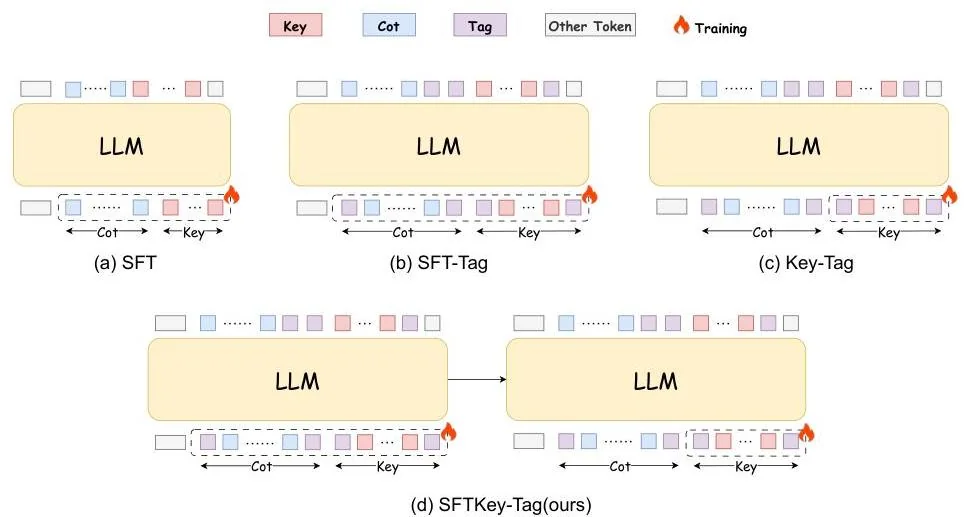
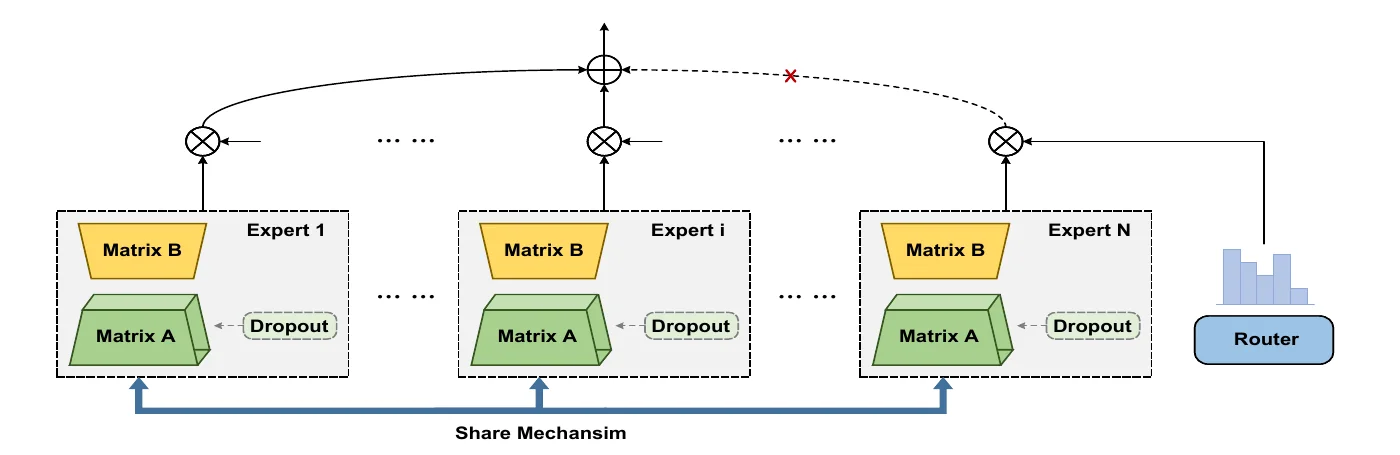
Inject, Align, Recover: Staged Post-Training for Retrieval-Free Document Knowledge Internalization
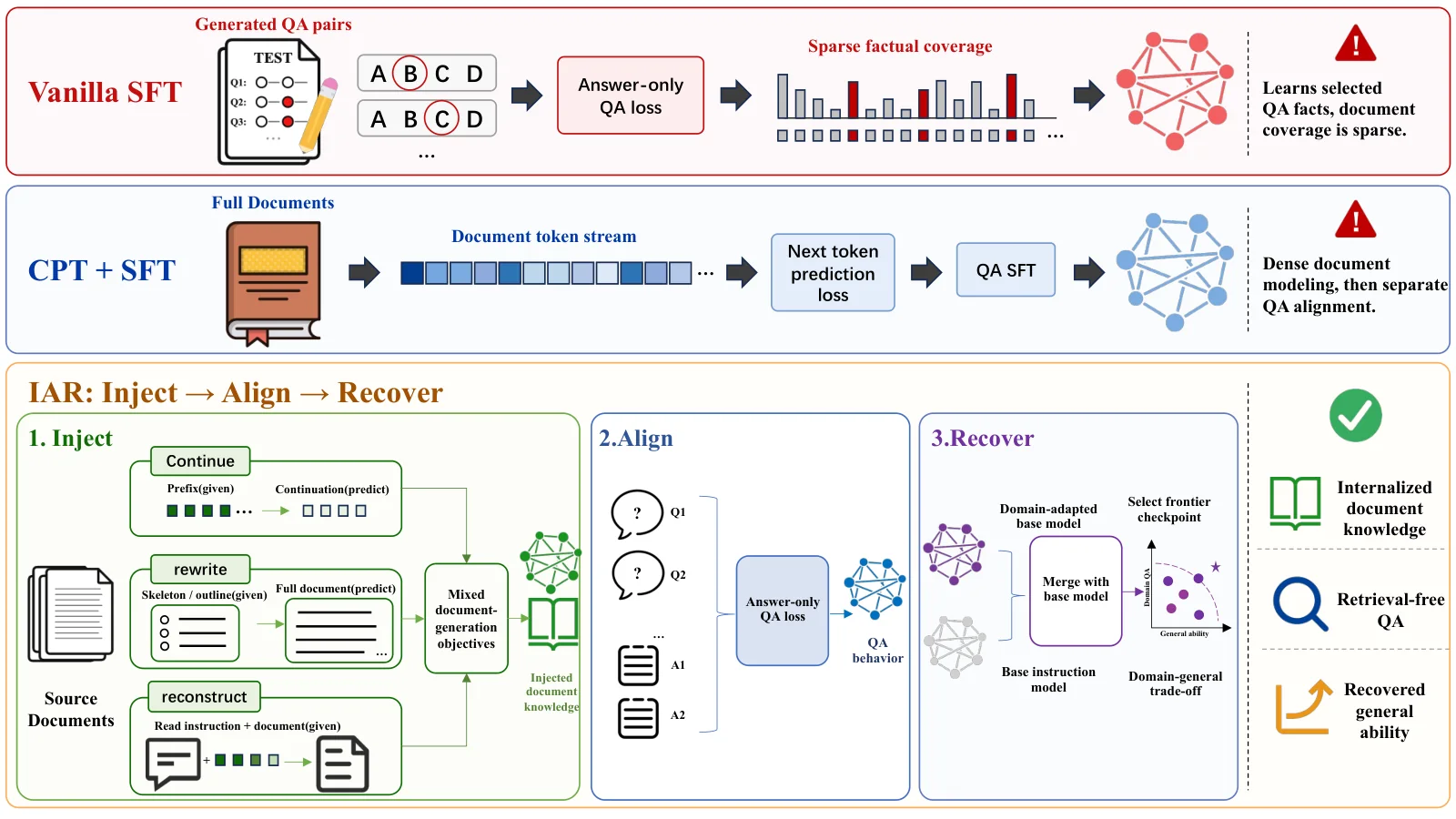
IAR comparison and three-stage Inject, Align, Recover workflow for retrieval-free document knowledge internalization.

Internalizes document knowledge for retrieval-free question answering while recovering general model capabilities.

Result: Across eight dataset-model settings, domain QA accuracy improves by an average 3.6 percentage points over Vanilla SFT.

All four reported metrics improve in seven of eight settings across CC and CCI and four model families. Mean general performance across IFEval, MMLU, and MSBench improves by 12.1 percentage points on average. The Inject, Align, and Recover stages separate knowledge injection, QA alignment, and general-capability recovery; some alternative methods win individual general metrics.
2026 paper Post-training

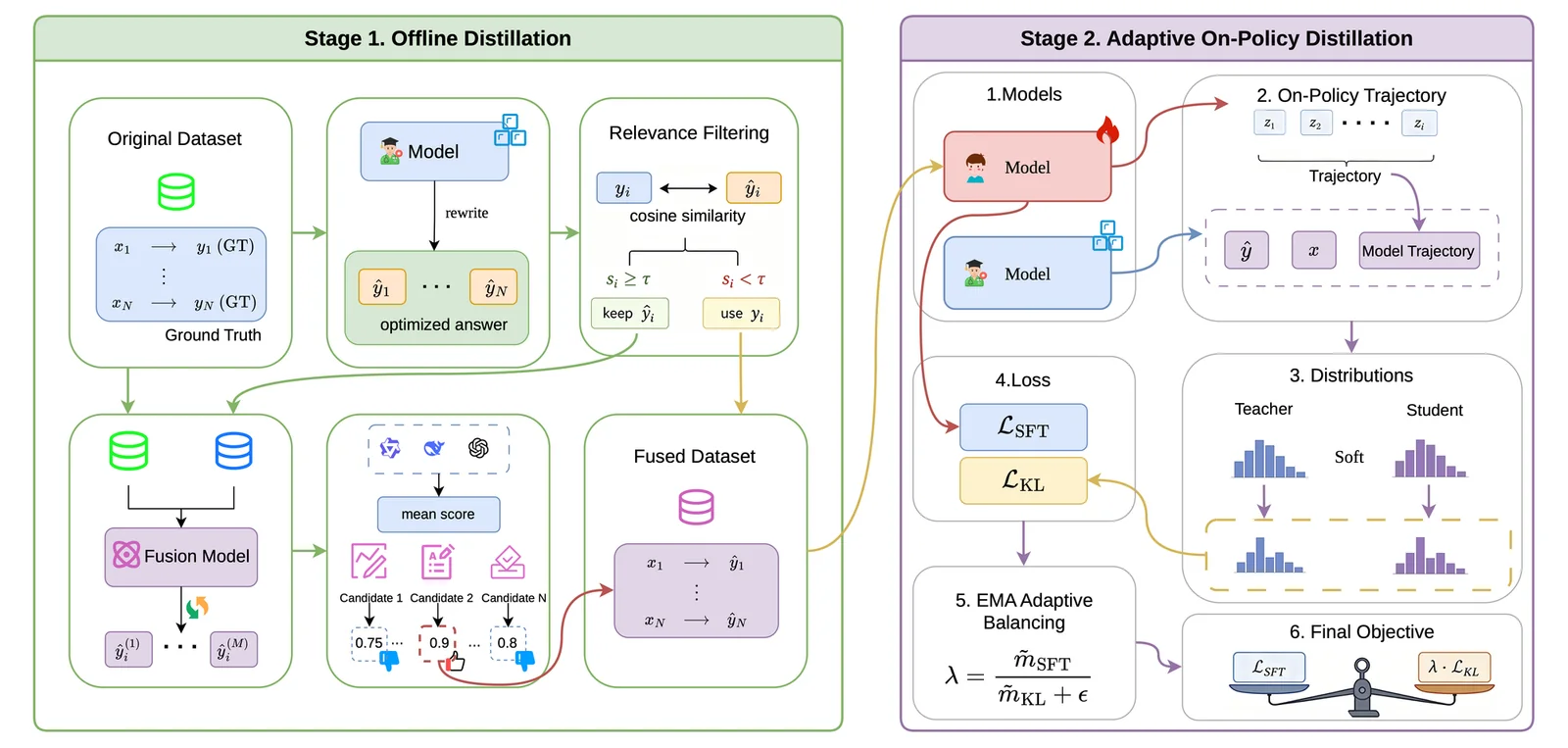
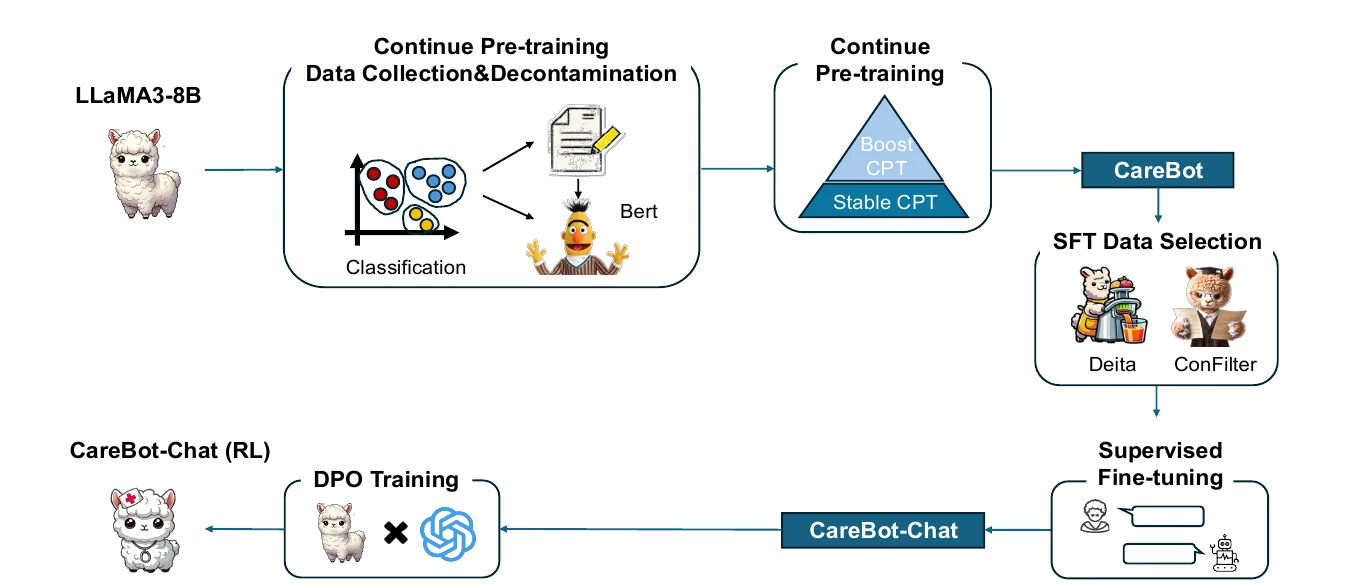
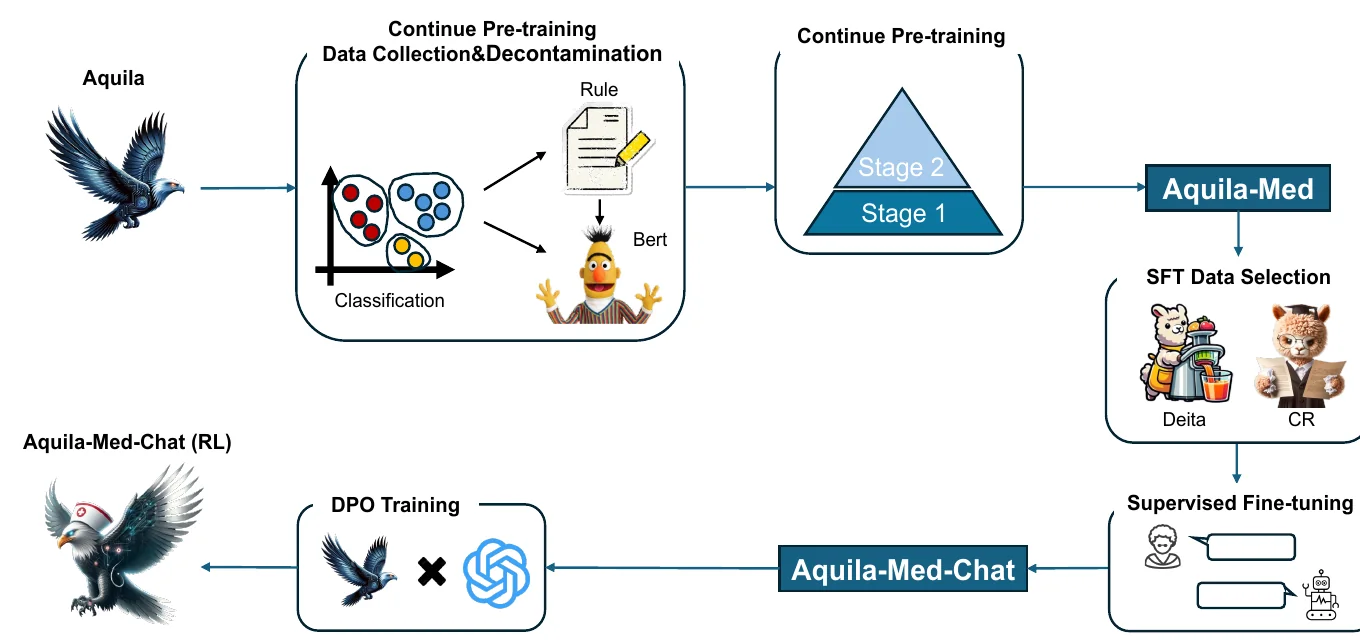
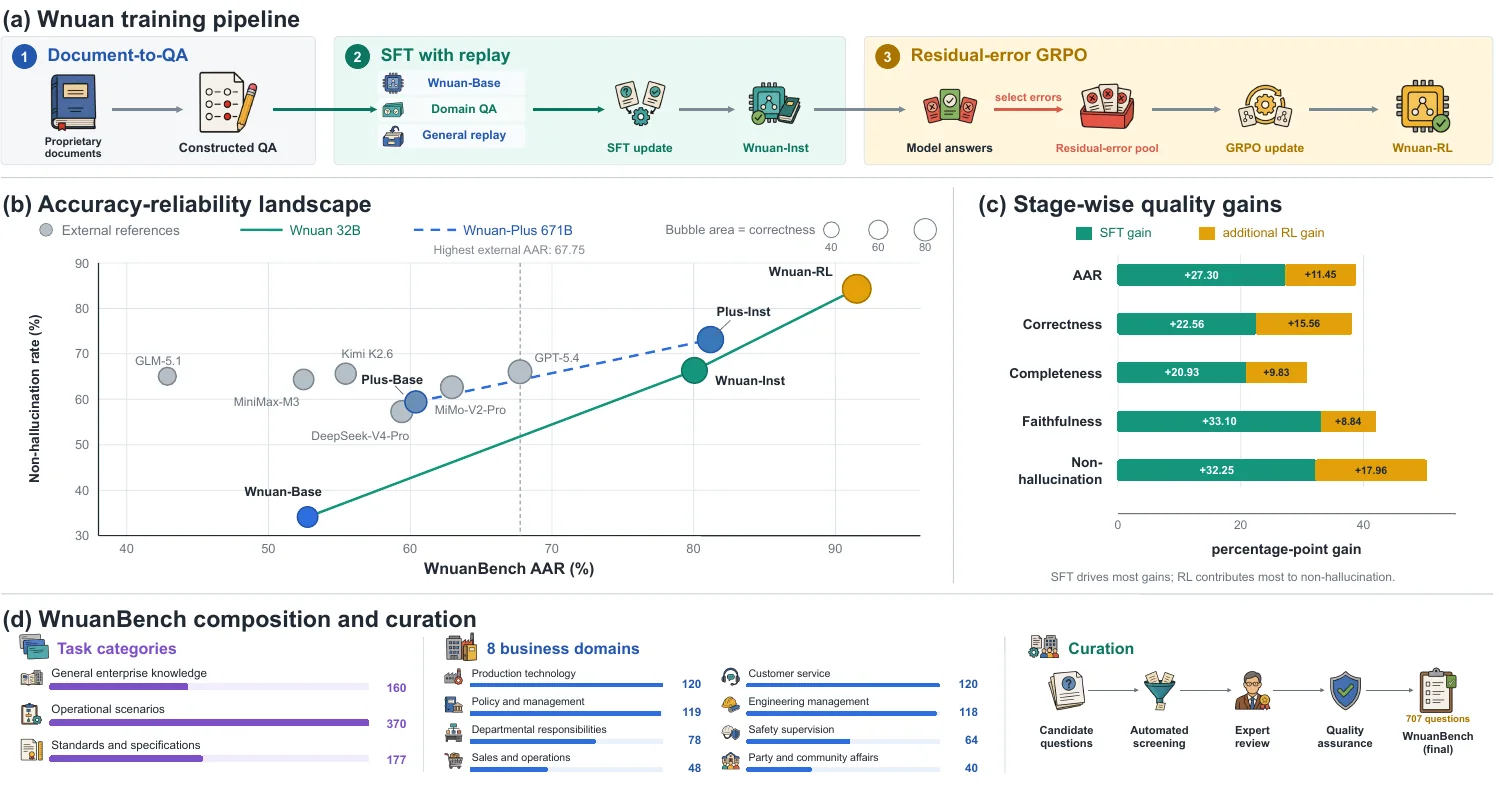
Wnuan: Staged Post-Training for Question Answering over Proprietary Enterprise Knowledge

Wnuan training pipeline, accuracy-reliability landscape, stage-wise quality gains, and benchmark curation overview.

Presents a three-stage post-training pipeline for question answering over proprietary enterprise documents and reports both domain results and general-capability trade-offs.

Result: On the 707-question WnuanBench, acceptable-answer rate rises from 52.76% before adaptation to 91.51% after RL; the general-benchmark average decreases by 5.17 points.

2026 paper ICML 2026 Multimodal reasoning

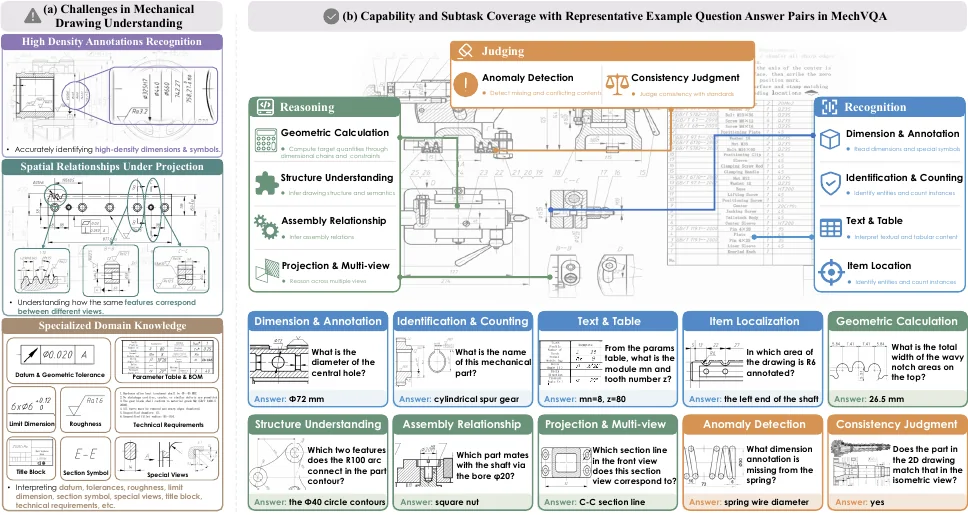
MechVQA: Benchmarking and Enhancing Multimodal LLMs on Comprehensive Mechanical Drawing Understanding

MechVQA overview showing mechanical-drawing challenges, the Recognition, Reasoning, and Judging taxonomy, and representative tasks.

Introduces the MechVQA mechanical-drawing benchmark and the MechVL domain-specialized multimodal model, with public code, benchmark data, and model resources.

Result: MechVL-4B-RL scores 84.85 on MechVQA Total, 7.57 points above Gemini-3-Pro-Preview (77.28) in the paper’s evaluation.

MechVQA contains 3.3K drawings and 21K QA pairs. Table 2 of the paper reports Gemini-3-Pro-Preview as the strongest evaluated closed-source baseline. Total is the benchmark total score, distinct from the unweighted average over ten subtasks.

2025 paper Agents and retrieval

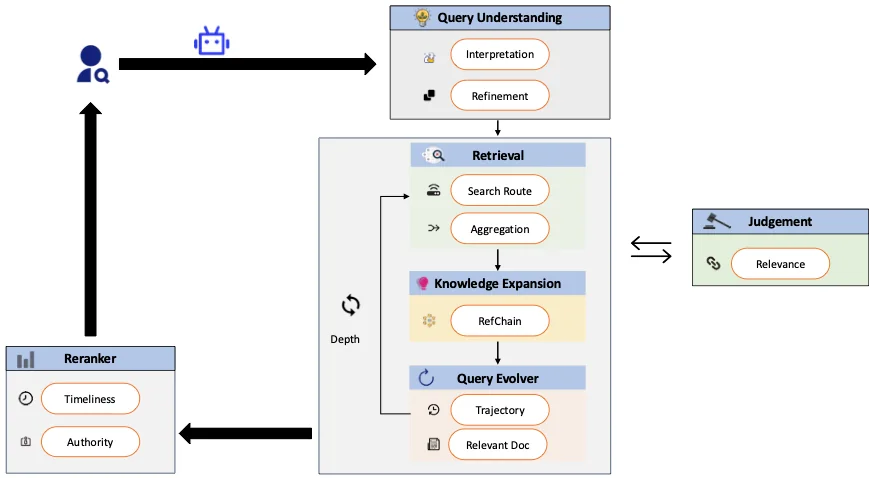
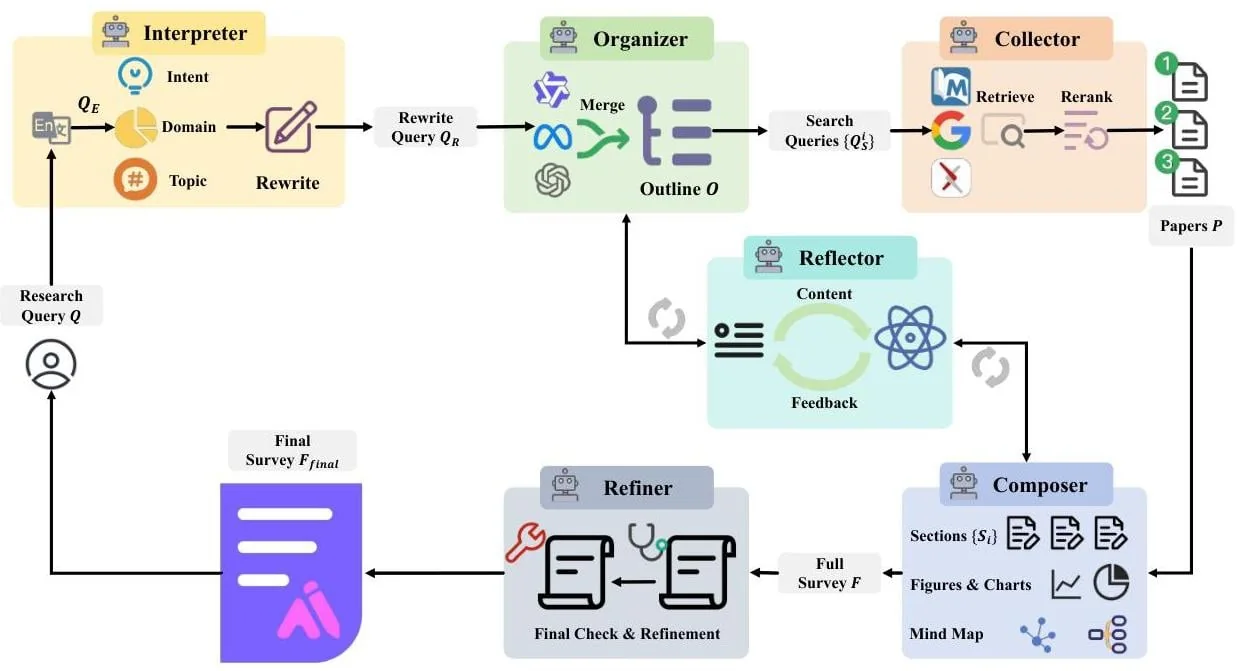
SPAR: Scholar Paper Retrieval with LLM-based Agents for Enhanced Academic Search

SPAR overview showing query understanding, iterative retrieval and knowledge expansion, relevance judging, and result reranking.

Introduces a multi-agent framework for scholarly retrieval and the SPARBench evaluation dataset with expert-reviewed relevance labels.

Result: F1 reaches 0.3843 on AutoScholar and 0.3015 on SPARBench: relative gains of 56.9% and 23.0% over the best baselines in Table 1.

The respective baselines are PaSa (F1 0.2449) and Google-ArXiv (F1 0.2451). Relative gain is (SPAR F1 − baseline F1) / baseline F1; the absolute F1 differences are 0.1394 and 0.0564. Systems use their native search sources rather than a shared retrieval corpus.

2024 model Domain models and data

IndustryCorpus2 DataRater

Releases a model card and checkpoint for assessing pre-training data quality across semantic consistency, information density, and educational-value dimensions.

搜索技术档案

搜索已发布文章。也可以浏览完整归档。

正在准备搜索…